Vietnamese Ruby
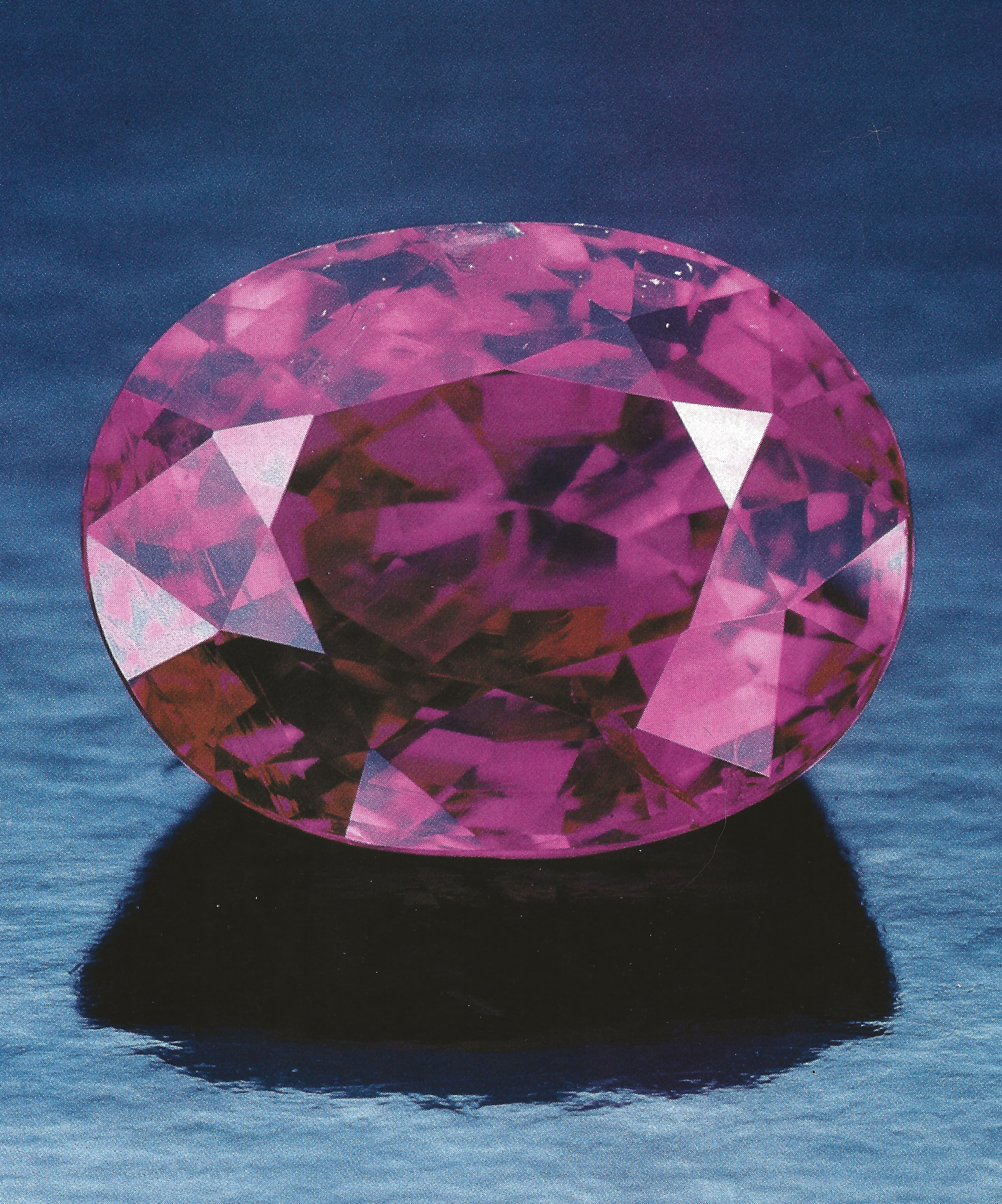
When it comes to ruby, one word has long sufficed to summarize this gem at its best: Burma. Mere mention of the place still makes mouths water and pulses pound in anticipation of seeing the finest color known for this red corundum.
Now ideal color and beauty in ruby may become synonymous with a second locale: Vietnam.
In no time at all, name-dropping of this Southeast Asian country is so rampant that just prefacing the presentation of rubies with the fact that they are Vietnamese makes minds race with extravagantly high hopes. As with Burmese ruby, those hopes are often dashed because origin is no guarantee of beauty. But lately expectations pay off, proportionately speaking, more often for Vietnamese than Burmese rubies. “Vietnam has the potential to be a major new source of high-end ruby,” says Cheryl Kremkow, director of the International Colored Gemstone Association’s Gem bureau in New York.
Some dealers go farther and say that Vietnam could replace Burma as the leading source of fine ruby. It’s too soon to tell. But the fact that within one year of its debut as a ruby source Vietnam already rivals Burma as the pinnacle producer is a tribute to the quality of the material being found there. Not since the appearance of sapphires from Kashmir a little over a century ago has there been as momentous a situation in the connoisseur corundum world. Indeed, given the vastly larger market for fine gems today, the news from Vietnam could be of more consequence.
But don’t uncross your fingers yet. Other auspicious ruby finds of recent years such as those in Kenya and Pakistan also showed great initial promise. But eventually their top-grade stones wound up being long-odds exceptions to the rule. Will Vietnam also be a flash in the pan as far as the quantity of gem splendors go? Or will it keep producing treasures with enough regularity for Vietnamese origin to become permanently as much a cachet as it is with Burmese rubies? So far, signs point strongly to the latter possibility.
Pride of place
The jewelry world is so starved for fine ruby and sapphire that when brilliant, sometimes flawless rubies with pink to pinkish-red colors reminiscent of Burmese stones first hit the Bangkok market in late 1990 skeptical dealers thought they were man-made. Now they know better.
Nevertheless, a year later, says Aphichart Fufuangvanich, Quality Color Co. Ltd., in Bangkok, exceptionally clean Vietnamese stones must still be sent to the Gemological Institute of America for identification as natural. And no wonder. Many so-called “Vietnamese” rubies are pennies-per-carat flame-fusion synthetics. Richard Hughes, vice president of academic affairs at the Asian Institute of Gemological Studies in Bangkok, warns that parcels of Vietnamese rubies sold both in Vietnam and Thailand are often salted with these simulacra.
Of course, the danger of buying lab-grown as natural ruby has always been great in Asia. But because Vietnamese ruby is commonly seen in eye-clean form, it may tempt more fraud than usual. Aphichart estimates that around 50%, an astonishingly high figure, of the ruby from Vietnam’s newest alluvial mining area lends itself to cutting high-clarity stones. That’s unheard of for any ruby source. No wonder some dealers are counting on Vietnam to depose Burma as the chief mainstay of fine ruby. They note that even in its heyday, Burma, closed to the outside world since 1962, never produced anything but a smattering of what the trade calls “clean” rubies.
High clarities alone can’t account for the fact that fine Vietnamese rubies currently command sizeable premiums for origin. Superb stones with Burma-like colors from the world’s other active sources – Thailand, Cambodia, Kenya, Tanzania, Afghanistan and Pakistan – do not have the same prestige of place. Indeed, they are often misrepresented as Burmese in order to coax higher prices from buyers. Sellers of Vietnamese ruby are spared having to lie about the origins of stones. These stones fetch extra on their own merits.
Girding for abundance
At present, Vietnamese goods comprise a minuscule amount of all the ruby available in Thailand. This may have to do with the fact that a sizeable number of the stones on the open market are bought from small diggings and smuggled into Bangkok. The one large-scale mining operation, a joint venture between B.H. Mining Co. Ltd. of Bangkok and Vietnam’s state-run Vinagemco, has yet to sell any of its production, although an auction of at least 225 kilograms of rough has been twice announced and then postponed. Aphichart, a partner in B.H. Mining, is confident the auction will finally take place later this year.
Meanwhile, says Henry Ho of Bangkok’s Jewelry Trade Center, more than 200 Thai buyers are scouting Ho Chi Minh City in a frantic, usually fruitless search for rough and cut stones. No doubt, availability will increase now that mining is on the rise. Already it is safe to say that a hefty number of the finest rubies in Bangkok are Vietnamese.
Unfortunately, few of these stones come to America because U.S. dealers are outbid by the Japanese for them. As a result of Japanese enthusiasm for these stones, the cost of fine Vietnamese rubies can easily be 50% higher than comparably sized, top-grade Thai stones – whose prices have been off limits to American buyers for some time.
Although fine faceted Vietnamese rubies have been seen in sizes up to 10 carats, most stones, say Aphichart and Ho, are under 2 carats. Short supply has prevented cutting of calibrated sizes needed for mass-production jewelry. Because many stones have exceptional clarity and color to begin with, heating is not quite the prerequisite for Vietnamese ruby that it is for Burmese and Thai goods.
If there are any problems with Vietnamese ruby, they have to do with species classification of stones from a color standpoint. Since many tend to be pink rather than red, American dealers often call them pink sapphires. The idea of calling such stones pink ruby – an idea strongly resisted by GIA – has not taken hold in this country.
For us, the problem isn’t what species name – ruby or sapphire – to use for pink corundum, but when to call a corundum pink or red. This could be decided by an international color standards commission – composed of all trade segments – charged with setting a demarcation point between the two hues. In any case, because Vietnamese ruby will likely become a factor in the fine goods market, and because much of it lies in an uncharted color borderland, this breed could finally force the gem trade to make up its mind when corundums are pink and when they are red.
The 2.74-carat Vietnamese ruby is courtesy of Calibrated Gems International, Los Angeles.