Tahitian Black Pearl
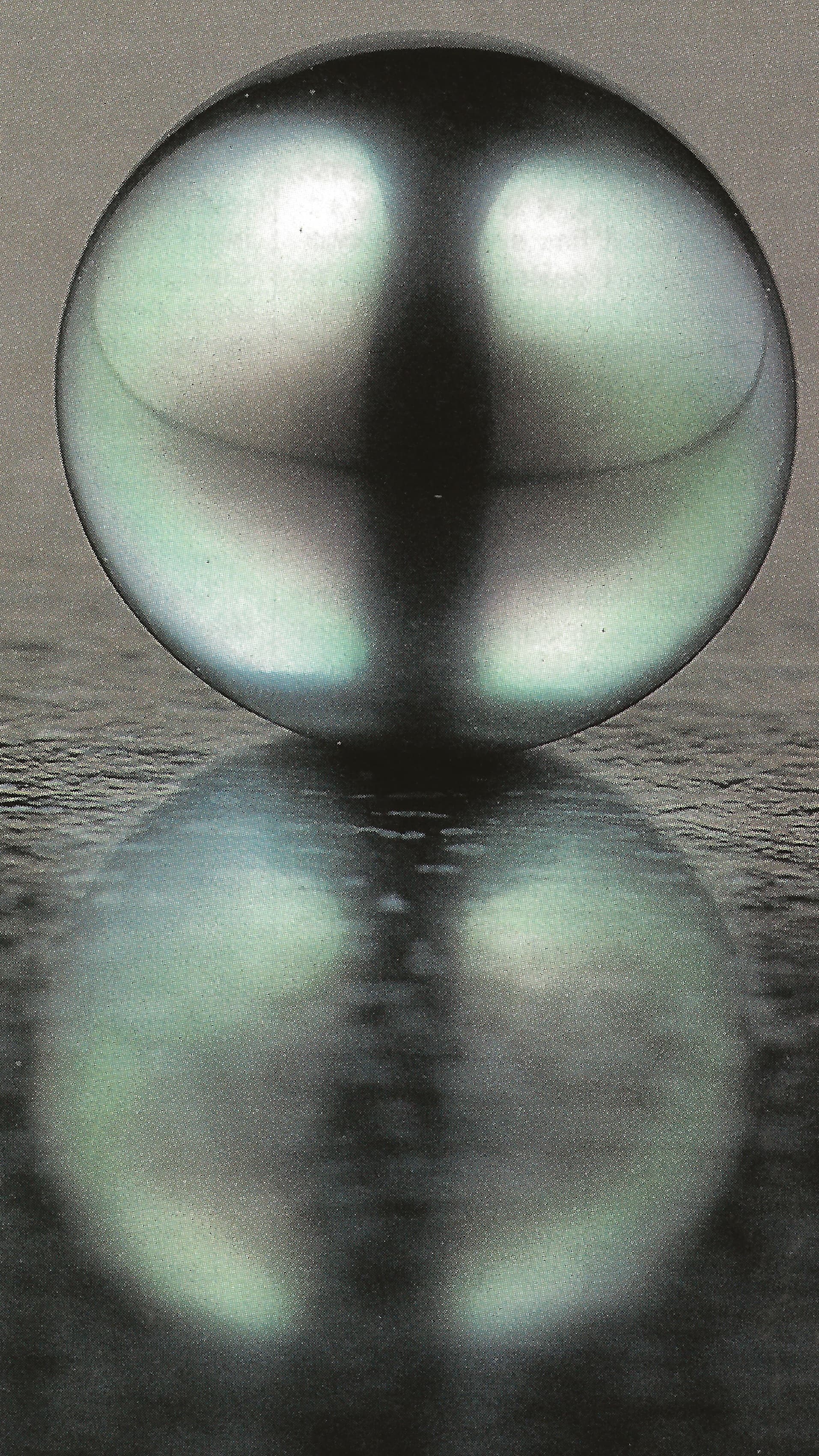
Once a month, a boat brings provisions to a tiny Pacific atoll called Marutea in the outlying southeastern portion of French Polynesia, better known as Tahiti. This is the only contact with the outside world the island’s 50 or so inhabitants have. That’s because the island is private property, owned since 1974 by Frenchman Jean-Claude Brouillet, who bought it from the government on the condition that he start an industry there. He chose pearl farming.
The population of his island is comprised solely of workers and their families living at his 10-year-old lagoon fishery. Every August, Brouillet’s workers harvest some 25,000 wearable natural-color black pearls. This is roughly 70% of the world production of this species, found mostly in Tahiti (hence its name, Tahitian black pearl).
To give you some idea of Marutea’s remoteness, the island is located 1,000 miles away from Papeete, the capital of Tahiti. It is to this city that Brouillet’s pearls are flown – a seven-hour trip by air – after harvesting and grading. Once there, they are handed over to Brouillet’s pearl-business partner, Salvador Assael, Assael International Inc., New York City. Assael, who is a major dealer in South Sea pearls, handles the marketing of these black beauties.
Although Tahiti boasts a number of government-subsidized mom-and-pop black pearl farms, it is generally acknowledged that Assael International has a virtual monopoly on this species. Indeed, a pearl dealer we talked to calls the company “the De Beers of black pearls.” But unlike De Beers, Assael International has little to fear in the way of market turbulence. With almost no competition, the company is a one-man market. Its only problems have to do with nature. But except for a hurricane in 1983, things are just as you’d expect them on a South Sea island: smooth and tranquil.
Nevertheless, there are those who wish pearl farming on Marutea and all other Polynesian islands would take on more of the hustle and bustle it has in Japan. That’s not likely, though, for a number of reasons.
Longer Shell Life
Black pearls are produced by a black-lipped oyster found throughout Micronesia (a vast South Sea island complex that includes French Polynesia). As with the far more plentiful Japanese variety, Tahitian pearl culturing consists of inserting a bead-nucleus, made entirely of processed Mississippi River and drainage system clamshell into the oyster, then waiting until the oyster covers it with a substantial layer of secretion called nacre.
Although the techniques are the same, philosophies of pearl growing are different in Japan and Tahiti. To boost pearl production, Japanese often implant oysters with two or more nuclei. Indeed, if you are buying Japanese cultured pearls that are 6mm or less in size, you should assume they came from multiple dwelling pearl oysters. In Polynesia, however, pearl farmers stick doggedly to a one-pearl-per-oyster policy, even though the South Sea oyster used is much larger than its Japanese counterpart. This is the way it’s always been there, and according to Salvador Assael, is intended to stay.
One reason for the single nucleus policy is that Tahiti is famous for large pearls. Multiple implantations would, it is true, increase production – but at the expense of greater sizes. Tahitian pearl growers also depart from the Japanese emphasis in recent years on shorter and shorter growing times. Every oyster that Assael International harvests has spent at least two years in the water.
But by taking growing times to such lengths, Assael and other Tahitian pearl farmers sacrifice a good many round pearls. Remember, the longer a pearl sits in an oyster, the greater its chances of shifting position and growing unevenly. Hence the overwhelming majority of Tahitian pearls are baroque. In fact, Assael confesses his production of round pearls is only 3%, vastly below the percentage of Japan.
Can anything be done to improve production of round black pearls? Yes, says renowned pearl dealer and expert John Latendresse, American Pearl Creations, Camden, Tenn.: “Polynesian pearl growers should insist that the Japanese, who hold a monopoly on the manufacture and sales of pearl-culturing nuclei, sell them a better grade bead.”
Latendresse accuses Japanese bead makers of deliberately selling South Sea pearl farms “third and fourth quality beads.” He claims to have verified his charges by personal examination of black pearl nuclei. Many of these, he says, are infested with parasites whose borings leave bits of organic wax on the surface of the beads. “Nacre won’t adhere to the nucleus in places where there is wax,” he explains. “As a result, you get baroque pearls.”
Assael dismisses such charges and says his low round rate is entirely due to nature. In any case, he isn’t complaining. First of all, he says, baroque shapes are very popular in Europe. Secondly, prices paid for top grade large round black pearls reach as high as $20,000 so he is compensated for his ultra-limited harvest of rounds.
Quality Not Quantity
Each year, usually between April and June, Assael’s Japanese technicians implant some 60,000 oysters. Two, sometimes three years later, they are harvested, generally, says Assael with at least a 40% success rate. Their long incubation period results in a layer of nacre thicker than that of most Japanese pearls. Many Japanese pearls sold abroad have a nacre thickness well under 1mm due to their shorter time in the sea. Assael’s pearls on the other hand, generally boast a minimum nacre thickness of 2mm. Admirer Latendresse calls them a “quality product.”
As with white pearls, there are definite standards for excellence in black pearls. Foremost is color, which runs from light gray to dark gray, often with bluish, peacock-green and eggplant-green overtones. At present, high-luster peacock greens and some gun-metal grays are the most coveted colors. Second in importance is cleanliness, for which Assael uses a grading system that starts at A, spotless, moves to F, then down to SP1, SP2 and SP3 (various degrees of spottiness).
Luster, or surface shine, is more subjective. But the best black pearls have a kind of high-polish surface, reminiscent, in ways, of a ball bearing. Last, but not least, comes shape, ranked in desirability as follows: round, pear, semi-round, drop, button, baroque and rejection. Assael says he has a very small percentage of rejection pearls. “The oyster either produces or it doesn’t.”
(The Tahitian Black Pearl shown was provided by Morningstar Pearls, Santa Monica, Cal.)